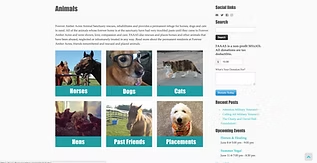
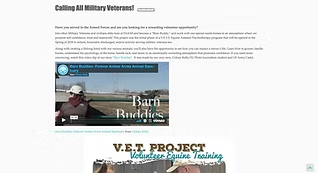
Designing an Animal Sanctuary Website to Boost Online Donations
In the digital age, a well-designed website is more than just an online presence—it is an essential tool for connecting with supporters, raising awareness, and driving donations. For animal sanctuaries, a thoughtfully designed website can make a significant impact on their mission. By optimizing the site’s user experience (UX), integrating donation features, and leveraging tools like Google Analytics, FAAAS was able to engage visitors, promote giving, and continuously improve their efforts based on data-driven insights.
Starting with the basics
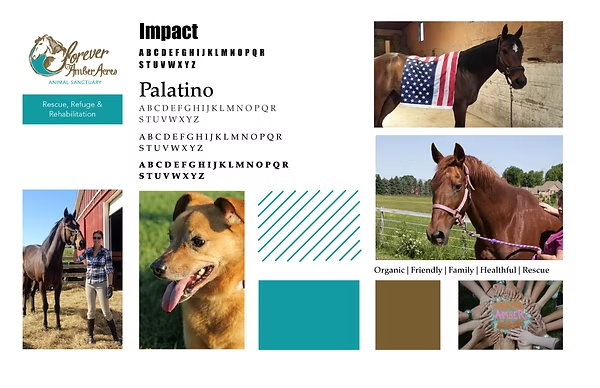
The first step for designing this website was to compile some brand assets. It’s important for the user to know who FAAAS is whether they’re looking at them online or in print! I put together a quick sheet for referencing when I started designing the site. Emphasizing the beautiful animals and serene environment was a must for this brand. I took some time to go out to the farm and photograph some of the animals that are permanent residents there. Due to time constraints I could not gather photos of a program in progress. Instead, I encouraged the owner to snap some of her own pictures when she had the time.
Optimizing User Experience (UX) for Engagement and Donation Growth
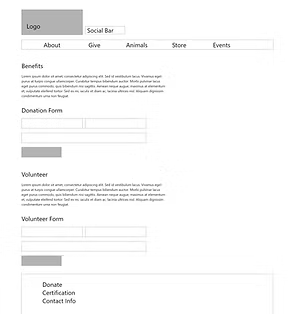
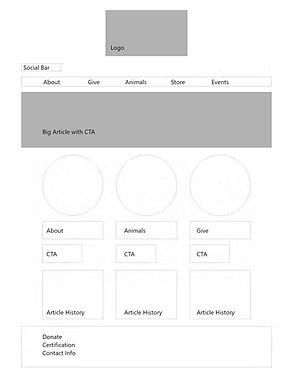
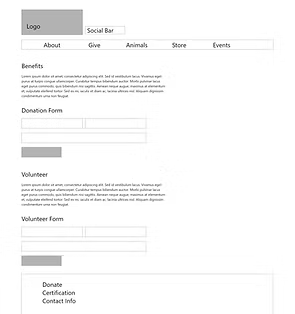
The first step to driving online donations was ensuring that the sanctuary’s website provided an intuitive and engaging experience. I began by clarifying a few Call To Actions (CTAs). The main goal of the website was to guide visitors toward donating, adopting, or supporting the sanctuary in some way. A visible and attractive donation button was placed on the homepage and in the header so users could easily find it no matter where they were on the site. Additionally, CTAs highlighted the sanctuary’s urgent needs, such as funding for animal rescue, medical care, and sanctuary maintenance. Here are some of the wireframes I put together to show a simpler flow of information to the site’s users.
Highlighting the important stuff
Next, I simplified their donation process using Stripe. The fewer steps involved, the more likely users were to complete their donation. A simple, secure donation form allowed users to choose their amount, provide payment information, and submit quickly. Offering options for one-time or recurring donations catered to different types of donors.
Compelling stories about the sanctuary’s animals and mission were created and shared. High-quality images and videos helped foster a personal connection, drawing visitors into the sanctuary’s world. Individual animals, their recovery stories, and the direct impact donations had on their well-being were highlighted. By making donors feel emotionally invested, the sanctuary was able to inspire more contributions. Finally, donors wanted to know how their money was being used. A section was included to showcase how funds were spent, such as on food, veterinary care, and give-back programs. Providing this transparency fostered trust and encouraged larger or recurring donations
Incorporating Google Analytics for Data-Driven Decision Making
Google Analytics was a powerful tool that offered invaluable insights into how visitors interacted with the sanctuary’s website. By using this data, the sanctuary could fine-tune its site, optimize the donation experience, and create more effective marketing campaigns. By setting up conversion tracking, the sanctuary was able to measure how many visitors to the site were completing donations. Google Analytics tracked specific events like button clicks or form submissions. This data showed where users dropped off in the donation process, helping identify pain points to improve.
Google Analytics also helped the sanctuary understand how visitors were navigating the site. They were spending a lot of time on the animal rescue stories page. Did they browse the sanctuary’s blog? Understanding user behavior enabled the creation of content and call-to-action buttons that spoke to the interests of the audience.
A
Integrating Social Proof and Community Engagement
Animal sanctuaries often benefit from a strong community of supporters who felt deeply invested in their cause. Incorporating social proof elements into the website, such as testimonials, donor shout-outs, and social media links, boosts credibility and encourage more donations.
Stories or testimonials from existing donors or volunteers were featured in several spots on the site. Testimonials that highlighted how donations had positively impacted the sanctuary reassured new visitors that their contributions would make a difference. Positive social proof built trust and encouraged others to contribute. The website also included prominent links to the sanctuary’s social media pages. Displaying live social media feeds on the site created a sense of community and encouraged users to share their experiences with their networks.